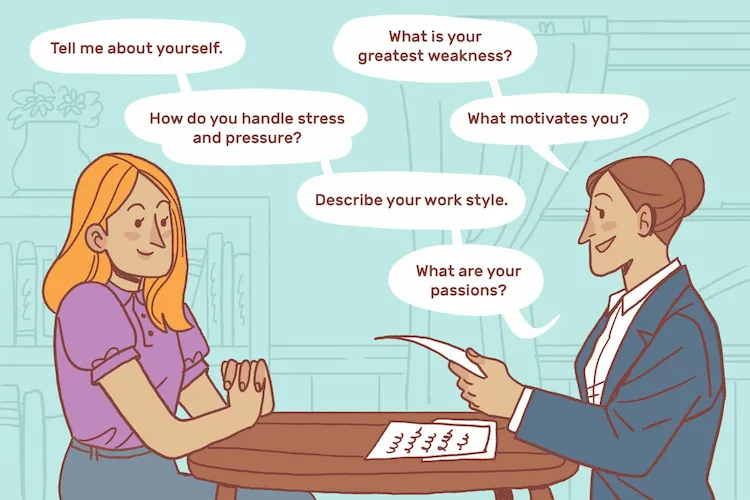
How to Introduce Yourself at a Job Interview 2026 – Learn different ways to introduce yourself confidently at a job interview in 2026. Here are Step-by-step structure, sample scripts, some common mistakes people make and how to avoid them, and answers to frequently asked questions.
The first thirty seconds of a job interview often determine the tone for everything that follows. Before you’ve answered a single technical question, the interviewer has already started forming an impression based on how you walk in, how you greet them, and most importantly — how you introduce yourself. A strong self-introduction signals confidence, clarity, and professionalism. A weak one can make even a highly qualified candidate seem unprepared.
This guide walks you through exactly how to introduce yourself at a job interview and answer most of the questions asked at the interview. What to include, what to avoid, and how to structure your answer so it leaves a lasting positive impression.
Why Your Self-Introduction Matters So Much
Most interviews open with some version of “Tell me about yourself” or “Walk me through your background.” This is rarely a throwaway question. Interviewers use it to assess your communication skills, your ability to summarise complex information clearly, and how well you understand what they’re actually looking for in a candidate. It also sets the direction for the rest of the conversation — the points you mention here are often what the interviewer picks up on for follow-up questions.
A well-crafted introduction does three things at once: it confirms you are qualified, it shows you understand the role, and it gives the interviewer a reason to want to know more.
The Proven Structure: Present, Past, Future
The most effective way to introduce yourself in an interview follows a simple three-part structure. This format keeps your answer organised, concise, and easy for the interviewer to follow.
1. Present — Who You Are Right Now
Start with your current professional situation. State your name, your current role or status (student, recent graduate, currently employed, or job seeker), and a brief snapshot of your area of expertise or focus.
Example: “My name is Adaeze Okonkwo. I’m currently a Marketing Associate at a fintech startup in Lagos, where I manage social media campaigns and content strategy.”
2. Past — Relevant Background and Experience
Briefly highlight your educational background and the most relevant experience that connects to the role you’re applying for. Do not give a full chronological work history — pick only the experiences that are directly relevant to this specific job.
Example: “Before this, I completed my degree in Mass Communication at the University of Lagos, and during my NYSC, I worked with a digital marketing agency where I learned how to run paid ad campaigns and analyse performance data.”
3. Future — Why You’re Here and What You Want Next
End by connecting your background to the role you’re interviewing for. This shows intentionality — you’re not just looking for “any job,” you have a clear reason for wanting this specific position.
Example: “I’m now looking to move into a role where I can take on bigger campaign strategy responsibilities, and that’s exactly why I was excited to apply for this Marketing Officer position with your company.”
Sample Self-Introduction Scripts
For a Fresh Graduate / Entry-Level Candidate:
“Good morning, my name is Chidinma Eze. I recently graduated from the University of Nigeria, Nsukka, with a degree in Accounting, and I just completed my NYSC at a financial consulting firm where I supported the audit team with financial reporting tasks. I’m now looking to begin my career in a structured organisation like yours where I can grow my skills in financial analysis and contribute meaningfully to the finance team.”
For a Career Changer:
“My name is Tunde Bakare. For the past four years, I worked as a customer service representative in the banking sector, where I developed strong communication and problem-solving skills. Over the last year, I’ve been transitioning into tech by completing a UX design certification and working on freelance projects. I’m now looking to bring my customer-first mindset into a full-time UX design role, which is what drew me to apply for this position.”
For an Experienced Professional:
“I’m Funmilayo Adeyemi, and I currently lead a team of six engineers at a logistics company, where I oversee software development for our delivery tracking systems. Over the past seven years, I’ve worked across both startups and larger organisations, building scalable backend systems and mentoring junior developers.
I’m looking for a Senior Engineering Manager role where I can apply that experience at a larger scale, which is why this opportunity caught my attention.”
Common Mistakes Most People Make and How to Avoid Them
Reciting your entire CV. The interviewer already has your CV. Repeating it word for word, job by job, wastes time and shows poor judgement about what’s relevant.
Starting with personal details unrelated to the job. Avoid opening with your family background, hobbies, or unrelated life story unless specifically asked. Keep it professional and focused.
Speaking for too long. Your introduction should last between 60 and 90 seconds. Going much longer risks losing the interviewer’s attention before the real interview even begins.
Memorising a script word-for-word. A rigid, robotic delivery feels unnatural. Know your key points well enough to speak naturally, with slight variation depending on how the interviewer phrases the question.
Failing to connect your background to the role. Generic introductions that could apply to any job at any company miss the opportunity to show the interviewer you’re specifically interested in their position.
Speaking too softly or avoiding eye contact. Confidence in delivery matters as much as the content itself. Practice maintaining steady eye contact and a clear, audible tone.
How to Prepare Your Introduction Before the Interview
Make sure you research the company and the specific role beforehand so you can tailor your “future” section to reflect genuine knowledge of what they do. Practice your introduction out loud — not just in your head — several times before the interview, ideally in front of a mirror or with a friend. Time yourself to ensure you stay within 60 to 90 seconds.
Adjust your introduction slightly depending on whether the interview is virtual or in person — for virtual interviews, check your camera framing and lighting before you begin.
Frequently Asked Questions
Q1. How long should my self-introduction be in a job interview? Aim for 60 to 90 seconds. Long enough to cover your present, past, and future clearly, but short enough to keep the interviewer engaged and leave room for follow-up questions.
Q2. Should I memorise my introduction word for word? No. Memorise your key points and structure, but allow your delivery to sound natural and conversational. A word-for-word script often comes across as rehearsed and stiff.
Q3. What if the interviewer asks me to introduce myself differently from “Tell me about yourself”? Whether they ask “Walk me through your CV,” “Tell me about yourself,” or simply “So, tell me a bit about you” — the same present-past-future structure works. Just adjust your opening line slightly to directly respond to how the question was phrased.
If you still have any questions regarding this topic, just leave a comment on this page, and we will respond immediately.
Related:
- Coca Cola Recruitment
- NNPC Recruitment
- NUC Recruitment
- FRSC Recruitment
- NDLEA Recruitment
- NSCDC Recruitment
CURRENT JOBS NG is NOT the official page. This is only a one-page summarized information page. While we try to keep the information current and correct, be aware that information may change at any time without notice. Please always refer to the official website of the host/official page for complete and updated information.
Leave a Reply